
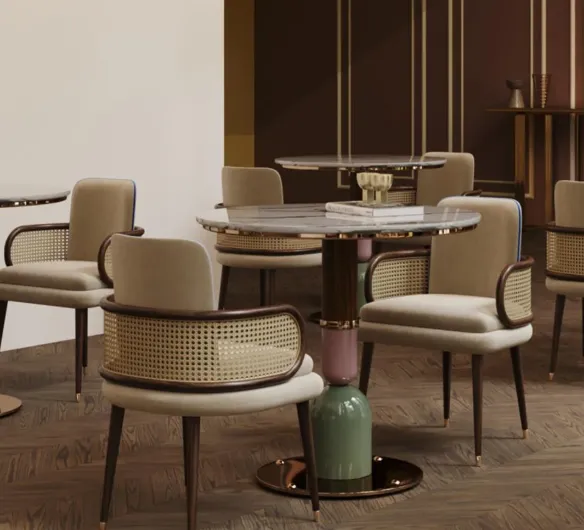
Dining chair height is one of those details people often notice only after something feels wrong. The table looks right. The chairs match the room. The materials work together. Then someone sits down and realizes their knees are too close to the underside of the table, or their thighs feel squeezed under the apron. The problem is not the style of the chair. It is the relationship between the seat, the table, and the body.
A dining chair does not work in isolation. It works only when it gives the seated person enough space below the table. The most important measurement is the gap between the top of the chair seat and the lowest point under the table. That lowest point is not always the tabletop. In many dining tables, the lowest point is the apron, support rail, drawer frame, or metal bracket beneath the edge.
For most adults, the ideal gap between the chair seat and the underside of the table apron is about 10 to 12 inches. This range gives enough room for seated thigh thickness, clothing, cushion compression, and normal movement during a meal. A tighter gap may still work for short periods, but it can quickly become uncomfortable when people sit longer, shift posture, or try to slide closer to the table.
This guide expands on the logic behind anthropometric measurements. Instead of treating chair height as a design preference, it treats it as a body clearance issue. The goal is simple: match the chair and table so the person sitting there does not have to fight the furniture.
Why Dining Chair Height Starts With the Human Body
A standard dining chair usually has a seat height between 17 and 19 inches. A standard dining table usually stands between 28 and 30 inches high. These numbers are useful, but they do not tell the whole story. A chair with an 18-inch seat may be perfect under one table and uncomfortable under another.
The missing detail is underside clearance. A 30-inch table with a thin top and no apron may give almost the full height for legroom. A 30-inch table with a thick apron may leave several inches less. That difference matters because the user’s thighs and knees sit below the apron, not below the top surface.
A seated adult thigh often measures around 5 to 7 inches thick, depending on body size, muscle mass, posture, and clothing. The body also needs space above the thigh. Without that space, the user feels pinned under the table. Even if the thigh does not press directly against the apron, the lack of movement can make the chair feel wrong.
The person also needs room to shift. Dining is not a fixed seated position. People lean forward to eat, sit back while talking, move their legs, cross their ankles, and adjust their posture many times during a meal. A chair that works only when the user sits perfectly still is not a good chair and table match.
This is why the 10-to-12-inch gap is so useful. It allows for the thickness of the upper leg, a few inches of air above it, and small changes in posture. It also gives some tolerance for cushions, clothing, and different body types.
Foot position matters as well. If the seat is too high, the user may not place both feet comfortably on the floor. This can create pressure under the thighs and make the person slide forward. If the seat is too low, the knees rise too high and the table may feel too tall. The best dining chair keeps the feet grounded, the thighs supported, and the knees free under the table.
The 10-to-12-Inch Gap Explained Clearly
The most reliable comfort range for dining chairs is a 10-to-12-inch gap between the chair seat and the lowest point under the table. This measurement should be taken from the top of the seat after the cushion has compressed, not only from the empty chair height.
The reason is simple. The seated thigh needs about 5 to 7 inches of space. On top of that, the user needs roughly 2 to 3 inches of free space above the thigh. A little more room is needed for clothing, cushion behavior, and natural movement. Together, these details create the 10-to-12-inch target.
A 10-inch gap can work well for many adults when the table apron is shallow and the chair is not overly firm or bulky. It is usually the lower edge of the comfort range. The user has enough room, but not much extra.
An 11-inch gap is often the safest everyday target. It suits many homes because it gives more breathing room without making the chair feel too low. It also works well when different people use the same dining area.
A 12-inch gap gives a more generous fit. It is useful for larger users, taller users, thick cushions, longer meals, and dining rooms where comfort matters more than strict visual proportion. This gap also reduces the chance of knees brushing against the table structure.
A 9-inch gap may be usable, but it is not ideal. Some people will tolerate it, especially for short meals, but it can feel tight when the table has a deep apron. Under 8 inches, the setup often becomes uncomfortable for adult dining. At that point, the user may touch the underside of the table, sit too far back, or avoid sliding in fully.
The table apron changes the whole calculation. A thin tabletop may leave plenty of space. A thick apron steals the room exactly where the user needs it. This is why two tables with the same height can feel completely different with the same chair.
The Table Apron Is Often the Real Problem
Many people measure from the floor to the top of the dining table and assume the job is done. That number matters, but it does not describe the space where the body sits. The more important measurement is from the floor to the lowest obstruction under the table.
In many tables, that obstruction is the apron. The apron is the vertical piece below the tabletop, usually connecting the legs or supporting the structure. It may be only 1 or 2 inches deep, or it may be much deeper. Farmhouse tables, antique tables, and heavy traditional tables often have thicker aprons.
A table may look like it is 30 inches high, but a deep apron can reduce usable legroom to 26 or 27 inches. If the chair seat is 18 or 19 inches high, the remaining gap may be too small for comfortable thigh clearance. The table still has a standard height, but the dining setup feels cramped.
This is where many buying mistakes happen. A chair looks normal in a showroom or online listing. The table height looks normal too. When combined, they fail because the apron was not considered.
Cushions create another hidden issue. A chair may be listed as 19 inches high, but the real seated height depends on how much the cushion compresses. A soft cushion may sink by an inch or more when someone sits down. A firm cushion may barely compress. A wood seat has almost no compression at all.
This means two chairs with the same listed seat height can feel different under the same table. A thick but soft upholstered seat may end up lower in use. A thinner but firm seat may keep the user higher. The only measurement that really matters is the height of the seat while someone is sitting on it.
Seat shape also affects comfort. A crowned cushion can raise the thighs higher in the center. A flat wooden seat keeps the measurement predictable. A sagging seat may feel low after months of use. In busy dining spaces, repeated use can change the feel of a cushion faster than expected.
Chair arms add a separate clearance problem. Side chairs often slide easily under a table, but armchairs may hit the apron. When the arms cannot slide under the table, the chair stays too far out. The user then leans forward to reach the plate and loses support from the backrest. This is common with upholstered dining armchairs placed at the ends of a table.
A correct dining setup must clear the thighs, knees, arms, and feet. The 10-to-12-inch seat-to-apron gap handles the main body clearance, but the rest of the chair still needs to cooperate with the table.
Matching Chair Height to Different Dining Tables
Most standard dining tables work best with chairs that have a seat height between 17 and 19 inches. That range is common because it fits many adult bodies and many tables. Still, the right number depends on the table’s underside.
A modern table with a thin top and no apron can usually accept an 18- or 19-inch chair without trouble. The open underside gives the thighs enough room. These tables often feel more forgiving because there is no deep rail cutting into the clearance zone.
A traditional dining table with a moderate apron may work best with an 18-inch chair. If the apron is shallow, the user still has enough room. If the apron is deeper, the same chair may feel too high. In that case, a 17-inch seat may be more comfortable.
A farmhouse table needs extra attention. These tables often have thick tops, heavy rails, and strong aprons. The style may look solid and welcoming, but the underside can reduce legroom. A chair that works under a modern table may feel too tall under a farmhouse table. For these tables, measuring the apron clearance is not optional.
An antique table can also be difficult. Older tables may not follow current standard dimensions. Some are lower than modern dining tables. Others have drawers, drop-leaf supports, or deep aprons. Before matching chairs to an antique table, the underside should be measured on every side where people will sit.
A pedestal table removes some apron problems, but it can create other issues. The edge may provide good thigh clearance, while the base blocks the feet. A large central column can also limit knee position. The user may have vertical space but still feel awkward because the feet cannot rest naturally.
Counter-height and bar-height tables follow the same logic with different seat heights. A counter-height table usually stands around 34 to 36 inches high and pairs with seats around 24 to 26 inches. A bar-height table usually stands around 40 to 42 inches high and pairs with seats around 28 to 30 inches. The final clearance should still allow the thighs to fit comfortably below the table structure.
Footrests become more important as the seat gets higher. At counter and bar height, most users cannot place their feet flat on the floor. Without a footrest, pressure builds under the thighs, even when the table clearance is correct. A good high chair or stool supports the feet as carefully as it supports the seat.
Restaurants and cafés need to be especially careful because many different bodies use the same seating every day. A dining room filled with attractive chairs can still feel uncomfortable if the seat height does not match the table apron. This is also why buyers of commercial dining chairs should check seat height, cushion firmness, arm height, and table clearance together rather than choosing only by appearance or durability.
Using Anthropometric Averages Without Ignoring Real People
Anthropometric averages help explain why certain furniture dimensions work. They give designers a practical starting point based on body measurements such as seated height, knee height, thigh thickness, hip width, and reach. But averages should not be treated as exact answers for every person.
A dining chair and table setup must serve a range of users. A family table may be used by children, teenagers, tall adults, shorter adults, older relatives, and guests. A restaurant table may be used by hundreds of different people in a week. One average body cannot represent all of them.
Taller users often need more knee and thigh clearance. Their legs may extend farther under the table, and their knees may sit closer to the apron. A deep apron can make them feel blocked, even when shorter users feel fine.
Shorter users may have a different challenge. They may fit under the table easily, but a high chair can leave their feet unsupported. When the feet do not rest flat, the front edge of the seat can press into the thighs. This pressure may cause the user to slide forward or sit on the edge of the chair.
Older users may prefer a slightly higher seat because it makes standing up easier. Very low chairs can put more strain on the knees and hips. Yet a higher seat must still leave enough room under the table. Raising the chair without checking apron clearance can create a new problem.
Children should not define the main table and chair dimensions. Adult dining furniture will often be too large for them. Booster seats, child chairs, and foot supports solve that problem better than changing the whole dining setup.
Body size also affects cushion behavior. A soft cushion compresses more under a heavier user and less under a lighter user. This can change the final seated height. A chair that gives one person 11 inches of clearance may give another person slightly more or less, depending on cushion compression and posture.
Clothing adds another small but real difference. Thick jeans, winter clothing, structured skirts, and layered garments all take up space. A setup that barely clears the thighs in light clothing may feel tight in heavier clothing.
The 10-to-12-inch range works because it allows for normal variation. It does not try to fit only one ideal user. It gives enough tolerance for different bodies, different postures, and different dining habits.
How to Measure Before Buying
A tape measure is the easiest way to avoid buying the wrong chairs. The process should begin with the table, not the chair. Measure from the floor to the top of the table, then measure from the floor to the lowest point beneath the table edge. The second number is the one that matters most for thigh clearance.
If the table has an apron, measure to the bottom of that apron. If the table has drawers, rails, brackets, or extension hardware, measure to the lowest part that sits above the user’s legs. A table can have good clearance on the long sides and poor clearance at the ends, so each seating position should be checked.
After measuring the table, measure the chair. For a wooden or metal chair, the seat height is usually stable. For an upholstered chair, press down on the cushion to estimate how high the seat will be when someone sits on it. The compressed height is more useful than the listed height.
The next step is simple. Subtract the chair’s real seated height from the table’s lowest underside clearance. If the result is close to 10 to 12 inches, the pairing is likely to work. If the result is closer to 9 inches, the setup needs careful testing. If it falls below 8 inches, most adults will probably find it tight.
A practical example can be written in plain terms. If a table has 28 inches of usable underside clearance and the chair seat sits around 18 inches high when occupied, the person has about 10 inches of space between the seat and the apron. That is usually acceptable. If the same chair is placed under a table with only 26 inches of usable underside clearance, the gap drops to about 8 inches. That is where discomfort usually begins.
Armchairs need one more check. The top of the chair arm should fit below the table edge or apron if the chair is meant to slide in. If the arms hit the table, the chair will stay too far out. This may not matter for a decorative chair that is rarely used, but it matters for daily dining.
Seat depth should also be considered. A very deep dining chair can push shorter users away from the backrest. A shallow chair may not support taller users well. The best dining chair allows the user to sit back, keep the feet grounded, and stay close enough to the table without leaning forward.
The base of the table deserves attention too. Four-leg tables can limit how many chairs fit between the legs. Pedestal tables can block feet. Trestle tables may have low stretchers that interfere with foot placement. A chair may have the right height and still feel wrong if the table base fights the user’s legs.
Online shopping makes these checks even more important. Product photos can hide apron depth, cushion thickness, and arm height. Listings may mention table height but not underside clearance. Before buying, ask for the seat height, underside clearance, apron depth, arm height, and cushion thickness. These numbers matter more than decorative descriptions.
Common Mistakes That Make Dining Sets Uncomfortable
The most common mistake is assuming that any standard dining chair will fit any standard dining table. Standard dimensions help, but they are not a guarantee. The apron, cushion, arms, and table base can change the fit.
Another mistake is choosing chairs only by appearance. A chair may look elegant beside the table but sit too high once someone uses it. Dining furniture must pass a body test, not only a visual test.
A third mistake is ignoring cushion firmness. A soft cushion and a firm cushion with the same listed height do not behave the same way. The soft one may compress into the right position. The firm one may keep the thighs too close to the table apron.
People also make mistakes with mixed chair sets. Mixing wood chairs, upholstered chairs, benches, and armchairs can look personal and natural, but the seat heights should stay close. A dining table feels awkward when one person sits noticeably higher or lower than the others.
Another common issue is solving an apron problem by choosing chairs that are too low. This may create more leg clearance, but it can make the tabletop feel too high. The user may raise the shoulders while eating or feel disconnected from the plate. A slightly lower chair can help, but a much lower chair creates a different kind of discomfort.
Some buyers forget that comfort changes over time. A chair that feels fine for two minutes in a showroom may feel tight after a full meal. A low apron, hard seat edge, poor foot position, or high armrest becomes more noticeable the longer someone sits.
The best test is simple. Sit in the chair at the table. Slide in fully. Place both feet on the floor. Check whether the thighs have room under the apron. Move slightly forward and back. If the table touches the knees or traps the thighs, the measurements are wrong.
The Final Rule for Better Dining Comfort
A good dining setup respects the body before it serves the room. The chair should not push the user too high, too low, too far away, or too close to the apron. The table should not steal the space where the thighs and knees need to move.
The 10-to-12-inch gap is the clearest rule to remember. Measure from the top of the occupied chair seat to the lowest point under the table. Aim for 10 inches as the lower comfort target, 11 inches as the safer everyday choice, and 12 inches when the seating must suit a wider range of users.
Standard chair and table heights are useful, but they are only the starting point. The real fit depends on underside clearance, apron depth, cushion compression, arm height, body size, and posture. Once those details line up, the dining area feels natural.
The right dining chair is not simply the one that matches the table. It is the one that lets people sit, eat, talk, shift, and stand without noticing the mechanics underneath. A few inches decide whether a meal feels relaxed or restricted. Measuring those inches before buying is the difference between furniture that only looks correct and furniture that works.