
Whether you’re comparing heights, converting pounds to kilos, or diving into health-related metrics, we’ve got you covered with accurate, easy-to-use tools. Today, we’re exploring blood pressure measurement—a vital health indicator that everyone should understand. Blood pressure measurement can seem straightforward, but getting it right involves technique, tools, and knowledge to ensure reliability.
What Is Blood Pressure?
Blood pressure refers to the force exerted by circulating blood against the walls of your arteries. It’s expressed as two numbers: systolic (the top number) and diastolic (the bottom number). Systolic pressure measures the force when your heart beats and pumps blood, while diastolic measures the force when your heart rests between beats. Both are recorded in millimeters of mercury (mmHg), a unit that originated from early measurement devices using mercury columns.
Understanding these components is key to interpreting any blood pressure measurement. For instance, a reading of 120/80 mmHg means systolic is 120 mmHg and diastolic is 80 mmHg. This dual metric provides a snapshot of your cardiovascular health, highlighting potential risks like hypertension if numbers are consistently high.
The physiology behind blood pressure involves your heart, arteries, and blood volume. When your heart contracts (systole), it pushes blood out, creating higher pressure. During relaxation (diastole), pressure drops. Factors like artery stiffness, plaque buildup, and overall heart function influence these values, making regular blood pressure measurement essential for early detection of issues.
Blood Pressure Measurement
The journey of blood pressure measurement dates back centuries. In 1733, Stephen Hales conducted the first direct measurement by inserting a tube into a horse’s artery, observing blood rise in a glass column. This invasive approach laid the groundwork, but it wasn’t practical for humans.
Fast forward to 1896, when Scipione Riva-Rocci invented the sphygmomanometer—a cuff-based device that measured systolic pressure non-invasively. In 1905, Nikolai Korotkov added the auscultatory method, using sounds (now called Korotkoff sounds) to detect both systolic and diastolic pressures. These innovations evolved into modern monitors, from mercury-based to digital, making blood pressure measurement accessible at home.
Today, advancements like oscillometric devices and wearable tech continue to refine accuracy, blending history with cutting-edge technology for better health tracking.
Why Is Blood Pressure Measurement Important?
Regular blood pressure measurement is crucial because high blood pressure (hypertension) is often called a “silent killer.” It shows no symptoms but can lead to serious conditions like heart disease, stroke, kidney damage, and vision loss. On the flip side, low blood pressure might cause dizziness or fainting.
Monitoring helps you spot trends early. For example, if your readings creep up, lifestyle changes or medical intervention can prevent complications. Blood pressure measurement also aids in managing conditions like diabetes or pregnancy, where fluctuations are common. At Sizescalematch.com, we emphasize precise measurements because accuracy in health metrics—like converting weights or dimensions—empowers informed decisions.
Methods of Blood Pressure Measurement
There are several ways to perform blood pressure measurement, each suited to different settings.
Auscultatory Method
This traditional manual technique uses a stethoscope and inflatable cuff. The cuff is inflated to block blood flow, then slowly deflated while listening for Korotkoff sounds: the first tapping indicates systolic, and silence marks diastolic. It’s highly accurate when done by trained professionals but requires skill to avoid errors.
Oscillometric Method
Most home devices use this automated approach. The cuff inflates and deflates, detecting vibrations (oscillations) in the artery to calculate readings via algorithms. It’s user-friendly and reduces human error, ideal for at-home blood pressure measurement.
Invasive Method
Reserved for hospitals, this involves a catheter in an artery for continuous, real-time monitoring. It’s the gold standard for accuracy in critical care but not for everyday use.
Choosing the right method depends on context—home users typically opt for oscillometric for convenience.
Types of Blood Pressure Monitors
Selecting the right device is key to reliable blood pressure measurement. Here’s a breakdown of common types:
- Upper Arm Monitors: Recommended by experts, these automatic cuffs wrap around the biceps. They’re accurate and easy to use.
- Wrist Monitors: Portable but less reliable due to positioning sensitivity.
- Finger Monitors: Compact, but not recommended as they can be inaccurate.
- Aneroid Monitors: Manual, dial-based; require a stethoscope and skill.
- Digital Monitors: Automated, with features like memory storage and app integration.
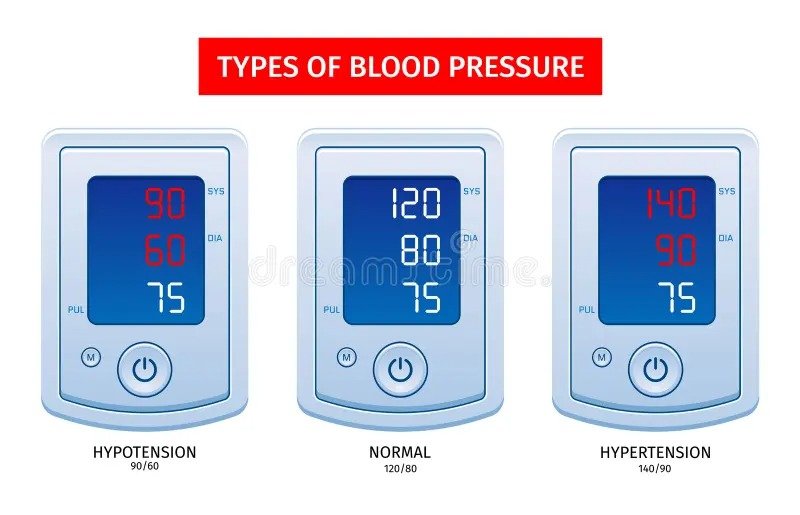
Always choose validated devices from lists like ValidateBP.org. For visual clarity, here’s an illustration of various monitor types:
Step-by-Step Guide to Measuring Blood Pressure at Home
Accurate at-home blood pressure measurement starts with preparation. Follow these steps for best results:
- Prepare: Avoid caffeine, smoking, or exercise for 30 minutes prior. Empty your bladder and rest quietly for 5 minutes.
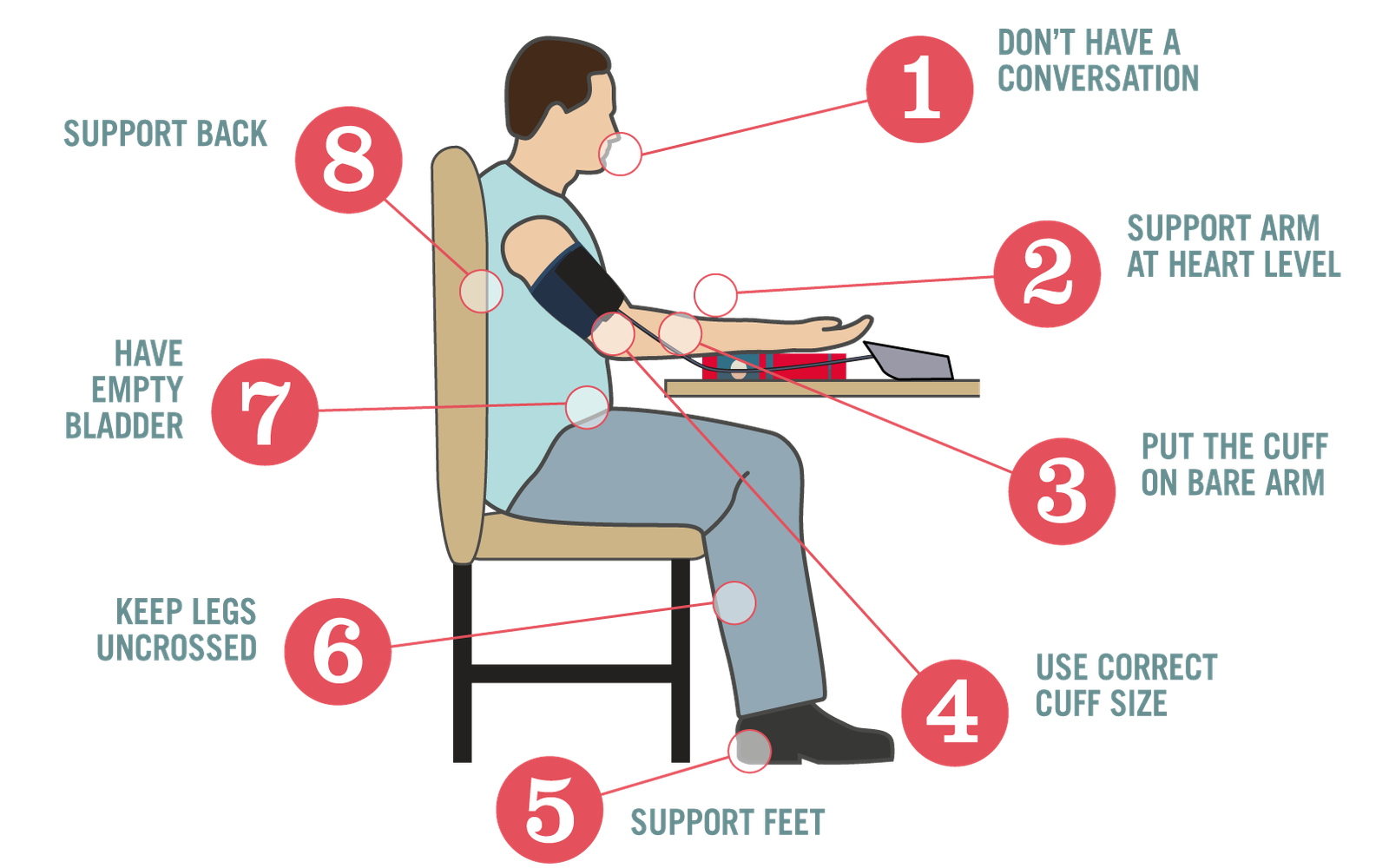
- Position Yourself: Sit in a chair with back support, feet flat on the floor, and legs uncrossed. Support your arm on a table at heart level.
- Apply the Cuff: Place it on your bare upper arm, just above the elbow. Ensure it’s snug but not tight.
- Take the Reading: Start the device. Remain still and silent. Take two readings, 1 minute apart, and average them.
- Record: Note the date, time, and readings. Use the same arm consistently.
For a visual guide, check this diagram showing the correct posture:
Interpreting Your Blood Pressure Measurement
Once you have a reading, what does it mean? Use this chart based on American Heart Association guidelines:
| Category | Systolic (mmHg) | Diastolic (mmHg) |
|---|---|---|
| Normal | Less than 120 | and Less than 80 |
| Elevated | 120–129 | and Less than 80 |
| Hypertension Stage 1 | 130–139 | or 80–89 |
| Hypertension Stage 2 | 140 or higher | or 90 or higher |
| Hypertensive Crisis | Higher than 180 | and/or Higher than 120 |
Normal Blood Pressure Ranges by Age and Gender
While guidelines target under 120/80 mmHg for most adults, average readings vary slightly by age and gender. Here’s a table summarizing typical ranges:
| Age Group | Female (mmHg) | Male (mmHg) |
|---|---|---|
| 18–39 | 110/68 | 119/70 |
| 40–59 | 122/74 | 124/77 |
| 60+ | 139/68 | 133/69 |
Factors Affecting Blood Pressure Measurement Accuracy
Many elements can skew your blood pressure measurement, leading to false highs or lows. Common factors include:
- Cuff Size: Too small overestimates; too large underestimates.
- Positioning: Arm below heart level raises readings; crossed legs add 10 mmHg.
- Recent Activity: Caffeine or exercise can elevate by 20 mmHg.
- Emotional State: Stress or talking increases pressure.
- Clothing: Measuring over sleeves can add up to 50 mmHg.
- Bladder Fullness: A distended bladder raises readings by 10-15 mmHg.
To minimize errors, follow guidelines strictly. If readings vary, recheck after resting.
Jigger Measurements: Sizes, Charts & Cocktail Conversions 2025
Common Mistakes and Tips for Accurate Readings
Avoid these pitfalls in blood pressure measurement:
- Using the wrong arm consistently—check both initially.
- Measuring right after meals or activity.
- Ignoring device validation or calibration.
Tip: Calibrate your monitor yearly, track trends in a journal, and share with your doctor. For pregnant individuals or seniors, use devices validated for those groups.
When to See a Doctor
If your blood pressure measurement consistently shows hypertension (130/80 or higher), or if you experience symptoms like headaches, chest pain, or vision changes, seek medical advice promptly. Sudden spikes over 180/120 mmHg warrant emergency care.
Regular check-ups ensure your measurements align with professional ones, adjusting for “white-coat hypertension” where readings are higher in clinics.
Frequently Asked Questions (FAQs) About Blood Pressure Measurement
1. What is a normal blood pressure reading?
A normal blood pressure reading is less than 120/80 mmHg. Readings between 120-129/<80 mmHg are considered elevated, while 130/80 mmHg or higher indicates hypertension. Always consult a doctor for personalized advice.
2. How do I accurately measure blood pressure at home?
Sit quietly for 5 minutes, with your back supported and feet flat on the floor. Place the cuff on your bare upper arm at heart level, and take readings at the same time daily. Avoid caffeine or exercise beforehand.
3. Which is better: upper arm or wrist blood pressure monitor?
Upper arm monitors are generally more accurate and recommended by health organizations. Wrist monitors can be convenient but are more sensitive to positioning errors.
4. How often should I measure my blood pressure?
For general monitoring, measure twice daily—morning and evening. If you have hypertension or are starting new medication, your doctor may recommend more frequent checks.
5. What does systolic and diastolic blood pressure mean?
Systolic (top number) is the pressure when your heart beats and pumps blood. Diastolic (bottom number) is the pressure when your heart rests between beats.
6. Can I measure blood pressure over clothing?
No, always place the cuff on bare skin. Measuring over clothing can inflate readings by up to 50 mmHg.
If you are Blessing Lover!! Then Blessing Read is just for you!!