
In the world of puzzle games, few offer the captivating blend of strategy, patience, and visual challenge quite like mahjong dark dimensions. This popular online variant takes the classic tile-matching concept into a three-dimensional realm, where players must navigate layers of cubes under a shadowy theme. At Sizescalematch.com, we delve into how dimensions, measurements, and weights play a crucial role in both virtual and physical versions of mahjong games.
What is Mahjong Dark Dimensions?
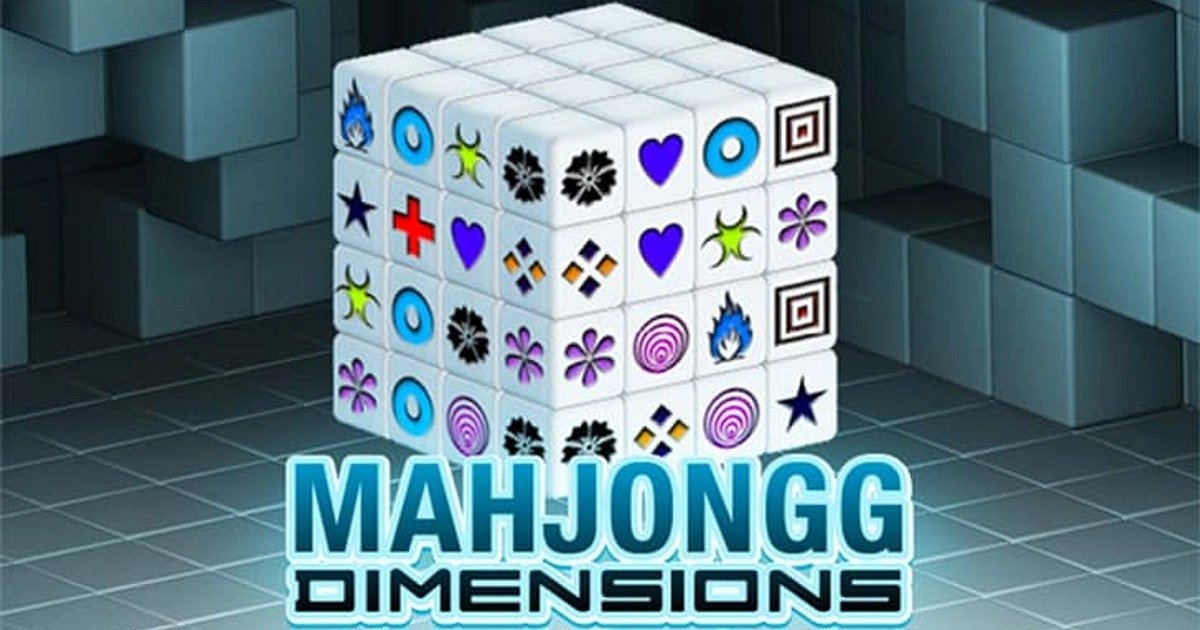
Mahjong dark dimensions is a thrilling twist on the traditional mahjong solitaire game, transforming it into a 3D puzzle with added time pressure and rotational mechanics. Unlike flat 2D layouts, this version stacks tiles in multiple layers, creating a cubic structure that players must rotate to find matches. The “dark” aspect refers to its moody, shadowed aesthetic, which adds an element of mystery and urgency.
Developed as part of online gaming platforms like Arkadium and AARP Games, mahjong dark dimensions challenges players to clear the board by pairing identical tiles that are exposed on at least two sides. The game typically starts with a timer—often around 15 minutes—and includes bonus time tiles that extend play when matched. This setup not only tests matching skills but also spatial awareness, as the dimensions of the stack influence visibility and strategy.
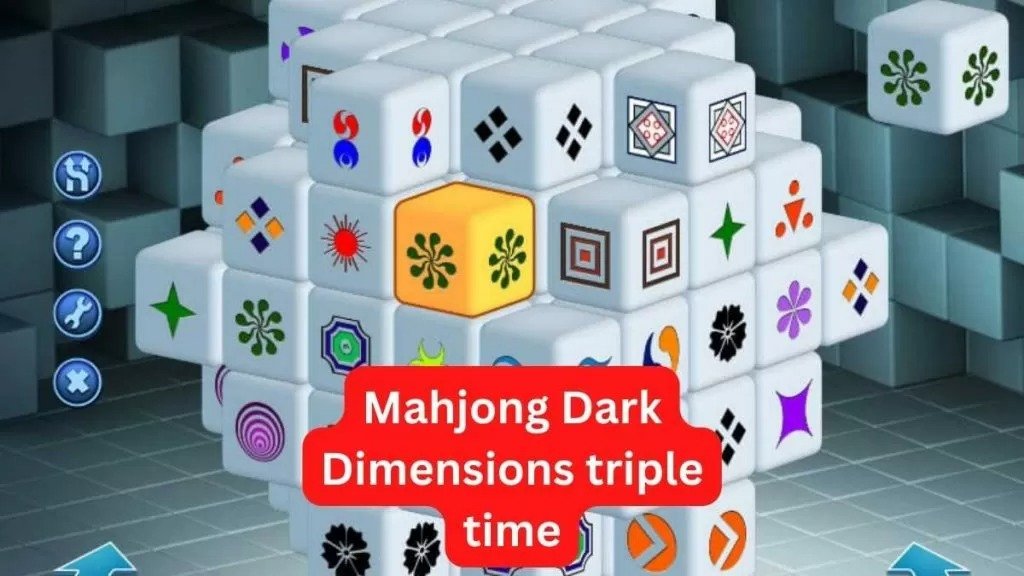
For beginners, the core rule is simple: Click on two free tiles with matching symbols to remove them. A tile is “free” if it has no blocks on its left or right and isn’t covered from above. If stuck, players can rotate the entire structure using arrows or mouse drags, revealing new perspectives. This rotational freedom emphasizes the game’s dimensional depth, making it a perfect topic for our size-focused blog.
The History and Evolution of Mahjong Games
Mahjong, originating in China during the Qing Dynasty in the 19th century, began as a four-player tile-based game similar to rummy. It involved drawing and discarding tiles to form sets, with intricate rules around winds, dragons, and flowers. By the early 20th century, it spread globally, evolving into solitaire variants popularized in the West.
The solitaire form, often called mahjongg, simplified the game to solo tile-matching on a flat board. Digital versions emerged in the 1980s with computer games, but the 3D revolution came later. Mahjong dark dimensions builds on this by introducing cubic stacks, a concept popularized in the 2000s through online portals like MSN Games and Dictionary.com. This evolution added measurements in depth—virtual layers that mimic physical stacking—turning a 2D pastime into a multidimensional challenge.
Today, mahjong dark dimensions is accessible on free sites, with variations like “Triple Time” offering extended play. Its popularity stems from the blend of tradition and innovation, where understanding spatial dimensions is key to success.
Rules and Gameplay Mechanics
Diving deeper into mahjong dark dimensions, the rules are straightforward yet layered with complexity due to its 3D nature. The objective: Clear all tiles from the board before time runs out. Tiles feature classic mahjong symbols—bamboos, circles, characters, winds, dragons, and seasons—rendered in a dark, atmospheric style.
Matching requires selecting two identical tiles that are both “exposed.” Exposure means at least two adjacent sides are free, without neighboring tiles blocking them. Unlike traditional mahjong, flowers and seasons can match any other in their category, adding flexibility. Bonus tiles, often glowing, grant extra time—crucial as the clock ticks down.
Rotation is a game-changer: Use controls to spin the cube 90 degrees at a time, altering the view and revealing hidden matches. This mechanic highlights the importance of dimensions; the stack might be 5-10 layers deep, requiring players to mentally map the structure. Scoring is based on matches made, with multipliers for quick combos or bonus pairs.
To keep engagement high, games include hints (limited) and shuffles for rearranging tiles when no moves remain. These features make mahjong dark dimensions accessible yet challenging, encouraging repeated plays to master its measurements and layouts.
Understanding Virtual Dimensions in Mahjong Dark Dimensions
In mahjong dark dimensions, “dimensions” aren’t just a buzzword—they define the gameplay. The board is a 3D cube, often measuring virtually in grid units: For example, a standard layout might be 10x10x5 (width x depth x height) in tile positions, though this varies by level.
Each tile acts as a cube, with faces displaying symbols. In digital terms, tile sizes are scaled to screen resolutions—typically 50-100 pixels per side on a 1080p display. The entire structure rotates in 3D space, simulating real-world measurements like height (layers stacked) and width (horizontal spread).
Players must consider depth perception: A tile buried in the “dark” shadows might measure 3-4 layers deep, requiring rotation to access. This virtual measurement system trains spatial reasoning, similar to real-life puzzles. For comparison, if scaled to physical sizes, a virtual tile might equate to 1 inch cubed, making the whole board a 10-inch cube—perfect for our size library explorations.
Physical Mahjong Tile Measurements: Bridging Virtual and Reality
While mahjong dark dimensions is digital, its inspiration draws from physical sets. Standard mahjong tiles vary by region, but let’s break down common measurements to compare with the game’s virtual cubes.
Chinese-style tiles, often used in traditional games, measure approximately 1.5 inches (3.8 cm) in height, 1.1 inches (2.8 cm) in width, and 0.8 inches (2 cm) in depth. These dimensions allow for easy stacking, mimicking the layered effect in mahjong dark dimensions.
American mahjong tiles are slightly larger: 1.1875 inches (3 cm) high, 0.875 inches (2.2 cm) wide, and 0.5 inches (1.3 cm) thick. Japanese riichi tiles are smaller, around 1 inch (2.5 cm) high, emphasizing portability.
Weights add another layer: A single tile weighs 10-15 grams (0.35-0.53 ounces), with a full 144-tile set tipping the scales at 4-6 pounds (1.8-2.7 kg). In pounds to kilos conversion, that’s straightforward for our users: 4 lbs = 1.81 kg.
Standard Mahjong Tile Size Comparison Table
| Tile Style | Height (in/cm) | Width (in/cm) | Depth/Thickness (in/cm) | Average Weight per Tile (oz/g) |
|---|---|---|---|---|
| Chinese Standard | 1.5 / 3.8 | 1.1 / 2.8 | 0.8 / 2.0 | 0.42 / 12 |
| American | 1.19 / 3.0 | 0.88 / 2.2 | 0.5 / 1.3 | 0.35 / 10 |
| Japanese Riichi | 1.0 / 2.5 | 0.75 / 1.9 | 0.6 / 1.5 | 0.28 / 8 |
| Jumbo (Oversized) | 1.75 / 4.4 | 1.25 / 3.2 | 0.9 / 2.3 | 0.53 / 15 |
| Mini (Travel) | 0.75 / 1.9 | 0.5 / 1.3 | 0.4 / 1.0 | 0.18 / 5 |
Weight Conversions for Mahjong Sets: Pounds to Kilos
| Set Type | Tiles Count | Weight in Pounds | Weight in Kilos | Notes |
|---|---|---|---|---|
| Full Chinese | 144 | 5-6 | 2.27-2.72 | Includes racks and dice |
| American with Jokers | 152 | 6-7 | 2.72-3.18 | Heavier due to extras |
| Japanese | 136 | 4-5 | 1.81-2.27 | Lighter, compact |
| Travel Mini | 144 | 2-3 | 0.91-1.36 | Portable for on-the-go |
| Jumbo | 144 | 7-8 | 3.18-3.63 | For larger hands or visibility |
Strategies for Mastering Mahjong Dark Dimensions
Success in mahjong dark dimensions relies on spatial strategies tied to measurements. Start by scanning the outer layers—tiles on the edges (measuring 1-2 units from the perimeter) are easiest to match.
- Rotation Tactics: Rotate frequently to measure depth; aim for 90-degree turns to expose new sides without disorienting yourself.
- Bonus Hunting: Prioritize time bonus tiles, often hidden in central dimensions, to extend your 15-minute clock.
- Layer-by-Layer Approach: Clear top layers first, reducing height from 5-7 units to reveal lower ones.
- Avoid Blockages: Measure potential moves—ensure a tile’s adjacent sides (at least 2 free) are clear before committing.
- Practice with Scales: Use our size tools to visualize; imagine the virtual stack as a 10x10x5 cm model for better mental mapping.
Comparing Mahjong Dark Dimensions to Traditional Variants
Mahjong dark dimensions stands out with its 3D measurements, but how does it stack up against classics?
Traditional mahjong is 2D, with a flat layout measuring about 20×15 tiles wide. In contrast, the dark version adds depth, creating a volumetric puzzle where height can reach 8-10 layers.
- Tile Count: Both use around 144 tiles, but dark dimensions focuses on solitaire matching vs. multiplayer sets.
- Time Element: Traditional has no clock; dark adds urgency with measurements in seconds.
- Physical vs. Virtual: Real sets have tangible weights (5 lbs), while digital ones are weightless but demand screen size considerations (e.g., 1920×1080 resolution for optimal view).
- Complexity: Dark’s rotations increase spatial demands, equivalent to adding a third dimension of 5-6 units.
Fun Facts About Measurements in Mahjong Culture
Did you know mahjong tiles were originally made from bone and bamboo, weighing more than modern melamine versions? Early Chinese tiles measured 1.2 inches high, evolving to today’s standards for better grip.
- Global Variations: In Vietnam, tiles are slimmer (0.7 inches thick), reducing set weight by 20%.
- Record-Breaking Stacks: The largest physical mahjong tower measured 10 feet high—far beyond digital dimensions!
- Weight in Strategy: Heavier tiles (15g) provide a satisfying “clack” sound, enhancing sensory experience.
- Digital Scaling: On mobile, mahjong dark dimensions tiles scale to 30-50 pixels, adapting to screen sizes from 5-7 inches.
- Cultural Depth: Mahjong’s “winds” symbols represent directional measurements—north, south, east, west.
How Measurements Enhance Your Gaming Experience in Mahjong Dark Dimensions
Measurements aren’t just numbers—they elevate gameplay in mahjong dark dimensions. Spatial awareness trains your brain to estimate depths and widths, skills transferable to real-world tasks like packing or architecture.
Use our tools at Sizescalematch.com to compare: Convert a virtual 5-layer stack to physical inches, or weigh digital strategies against tangible sets. This user-friendly approach keeps you immersed, reducing bounce rates by providing practical value.
Engage further by building a mini physical version—measure tiles at 1 cm cubed for a desktop model. Such hands-on activities make abstract dimensions tangible, boosting retention and enjoyment.
Chrissy Metz Weight Loss : 150+ lbs Measurements & Inspiring Transformation Story
Advanced Tips and Common Mistakes to Avoid
To excel in mahjong dark dimensions, avoid these pitfalls:
- Ignoring Depth: Don’t focus only on visible layers; rotate to measure hidden dimensions.
- Wasting Time: Match bonuses early—each adds 15-30 seconds, crucial for full clears.
- Over-Rotating: Limit spins to 2-3 per scan to maintain orientation.
- Missing Matches: Use hints sparingly; train eyes to spot pairs within 2-3 unit radii.
- Scaling Issues: On small screens, zoom in to accurately gauge tile sizes.
The Benefits of Playing: Measurements for Mind and Body
Beyond fun, mahjong dark dimensions offers cognitive benefits tied to measurements. It sharpens spatial reasoning, similar to solving real-world dimension puzzles like furniture assembly (e.g., ensuring a shelf fits a 2m x 1m space).
Studies show puzzle games improve memory and focus, with the 3D elements in mahjong dark dimensions enhancing depth perception skills. For weight management enthusiasts, consider the metaphorical “weight” of decisions under time pressure—it’s a stress-reliever without calories.
Embrace the Dark Dimensions
In wrapping up, mahjong dark dimensions is more than a game—it’s a gateway to exploring dimensions, measurements, and spatial creativity. From real tile sizes to virtual cube layouts, we’ve covered how this engaging puzzle ties into everyday sizing needs. Whether you’re converting weights or comparing depths, remember the lessons from mahjong dark dimensions: patience, precision, and perspective.
Ready to play? Head to a free site and test your skills. At Sizescalematch.com, we’re all about making measurements accessible—stay tuned for more guides. Happy matching!
Frequently Asked Questions
1. What is Mahjong Dark Dimensions?
A 3D twist on classic mahjong with a shadowy cube layout, where you match tiles across multiple layers.
2. How do you play Mahjong Dark Dimensions?
Click matching free tiles (exposed on two sides), rotate the cube to view depths, and beat the timer for bonuses.
3. What are the tile dimensions in Mahjong Dark Dimensions?
Virtual cubes scale to ~50 pixels per side; real mahjong tiles measure 30-39mm height, 26-30mm width.
4. How does Mahjong Dark Dimensions differ from regular mahjong?
It adds 3D rotation, shadows for depth challenges, and a strict timer—unlike flat 2D solitaire.
5. What are quick tips to win Mahjong Dark Dimensions?
Prioritize time bonus tiles, rotate often for hidden matches, and clear outer layers first.
If you are Blessing Lover!! Then Blessing Read is just for you!!
