
Introduction
Throughout history, technology has transformed the way humans interact with the world around them. From the invention of computers to the rise of Artificial Intelligence (AI), every major innovation has expanded the possibilities of what machines can accomplish. Today, scientists and engineers are exploring an extraordinary concept known as Programmable Matter, a technology that has the potential to reshape physical objects in real time according to user needs. Although still in the research and experimental stages, programmable matter is considered one of the most futuristic technologies currently being developed.
Imagine furniture that changes its shape depending on the number of people in a room, medical devices that automatically adapt to a patient’s body, or buildings capable of repairing themselves after structural damage. These ideas may sound like science fiction, but they are closely related to the vision of programmable matter. By combining nanotechnology, robotics, materials science, artificial intelligence, and advanced computing, programmable matter could redefine manufacturing, healthcare, construction, transportation, and countless other industries in the coming decades.
What Is Programmable Matter?
Programmable matter refers to materials that can change their physical properties, shape, appearance, or functionality in response to digital instructions or environmental conditions. Unlike traditional materials, which maintain a fixed structure throughout their lifetime, programmable matter is designed to reorganize itself automatically based on software commands or intelligent control systems.
Researchers are investigating several approaches to achieving programmable matter. Some concepts rely on microscopic robotic particles that cooperate like a swarm, while others focus on advanced materials capable of changing their molecular arrangement. Regardless of the underlying technology, the objective remains the same: to create materials that can dynamically transform themselves without requiring complete replacement or manual reconstruction.
This revolutionary concept has the potential to blur the distinction between software and physical objects, allowing everyday items to become flexible, adaptive, and multifunctional.
How Programmable Matter Works
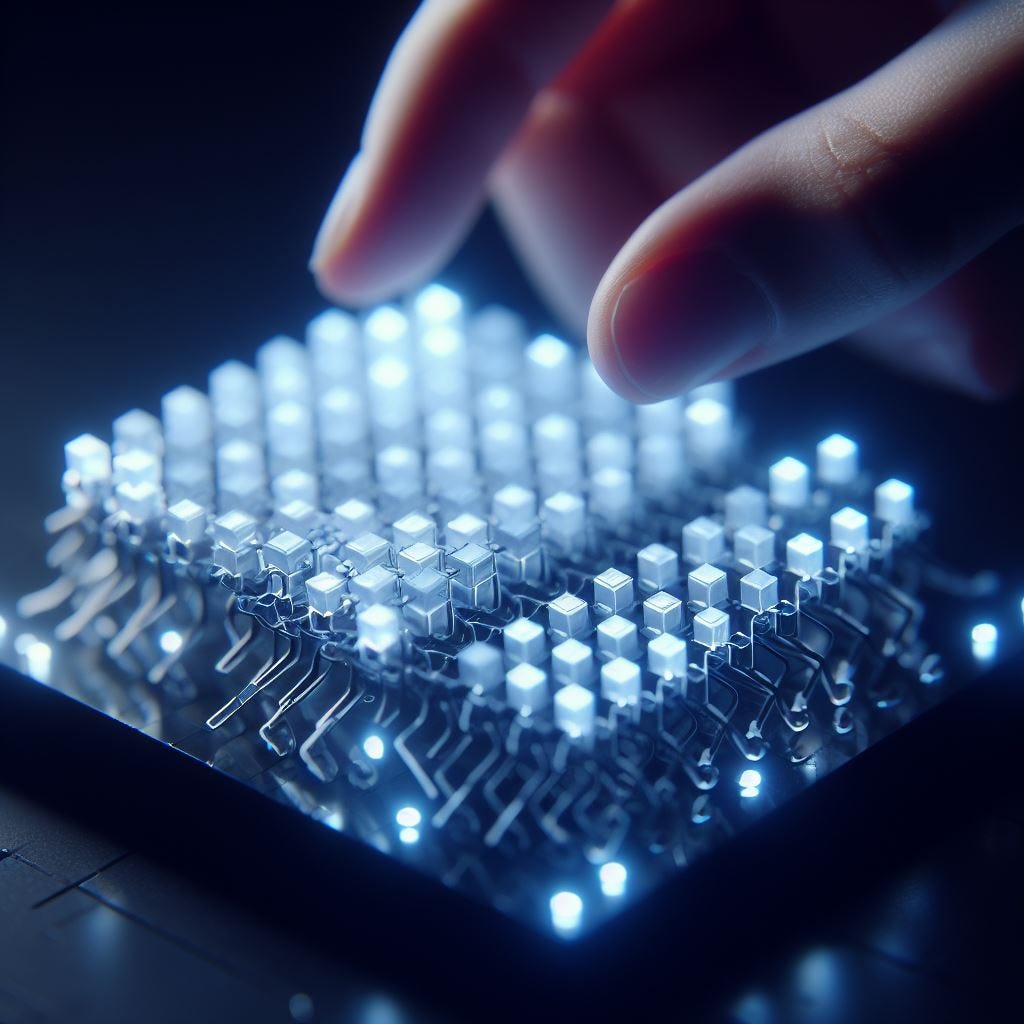
Programmable matter depends on the coordination of several advanced technologies working together. Tiny robotic units, often called “catoms” or programmable particles, are designed to communicate with one another while adjusting their positions to create different shapes. These microscopic components receive digital instructions through embedded processors and wireless communication systems.
Artificial Intelligence plays a critical role by analyzing environmental conditions and determining how the material should transform to achieve a desired outcome. Sensors continuously monitor temperature, pressure, movement, humidity, and other physical variables that influence system behavior. Machine learning algorithms enable programmable matter to improve its responses through experience, while cloud and edge computing provide the computational resources necessary for managing highly complex transformations.
As computing hardware becomes smaller and more energy efficient, scientists believe programmable matter will become increasingly practical for commercial applications.
Applications in Healthcare
Healthcare is expected to become one of the first industries to benefit significantly from programmable matter. Future medical implants could automatically adapt to changes within the human body, improving comfort and treatment effectiveness. Artificial organs constructed from programmable materials may continuously adjust their performance according to patient needs, reducing complications and extending device lifespan.
Surgeons may eventually use programmable surgical tools capable of changing shape during complex operations, allowing greater precision while minimizing tissue damage. Drug delivery systems built from programmable materials could release medication only when specific biological conditions are detected, improving treatment accuracy while reducing side effects.
Researchers also envision programmable prosthetic limbs that automatically adjust their shape, flexibility, and movement patterns according to different physical activities, providing users with greater comfort and mobility.
Applications in Construction and Manufacturing
The construction industry could experience dramatic changes through programmable matter. Buildings constructed with intelligent materials may automatically repair small cracks, strengthen structural components during earthquakes, or modify insulation properties according to weather conditions. Instead of demolishing damaged structures, programmable materials might restore themselves, significantly reducing maintenance costs and construction waste.
Manufacturing processes would also become more flexible. Factories could produce products that transform into different configurations after leaving the production line, reducing inventory requirements and enabling highly customized manufacturing. Consumers might purchase a single product capable of performing multiple functions simply by changing its physical form through software updates.
This adaptability would reduce raw material consumption while increasing production efficiency and sustainability.
Applications in Space Exploration
Space agencies are particularly interested in programmable matter because transporting large structures into space is extremely expensive. Future spacecraft could carry compact programmable materials that automatically assemble themselves into satellites, research stations, or habitat modules after reaching orbit. This capability would significantly reduce launch costs while increasing mission flexibility.
Astronauts exploring the Moon or Mars might use programmable tools that change into different instruments depending on immediate requirements, eliminating the need to transport large numbers of specialized devices. Self-repairing spacecraft components could also improve mission reliability during long-duration space exploration.
Benefits of Programmable Matter
Programmable matter offers numerous advantages that could reshape modern technology. One of its greatest strengths is adaptability. Instead of manufacturing separate products for different purposes, a single programmable object could perform multiple functions by changing its physical structure whenever needed.
Resource efficiency is another important benefit. Because programmable matter can continuously transform rather than being discarded, it has the potential to reduce waste, lower manufacturing costs, and support environmental sustainability. Intelligent materials capable of self-repair would also extend product lifespan and reduce maintenance expenses across multiple industries.
Safety could also improve significantly. Buildings, vehicles, and industrial equipment constructed with programmable materials might automatically detect structural weaknesses and adjust their properties to prevent accidents before they occur. Combined with Artificial Intelligence, programmable matter could create highly responsive systems capable of adapting instantly to changing conditions.
Challenges and Current Limitations
Despite its extraordinary potential, programmable matter remains largely experimental. Creating microscopic programmable particles with reliable communication, mobility, and energy efficiency presents enormous engineering challenges. Researchers must also develop sophisticated algorithms capable of coordinating millions of individual components simultaneously without causing instability.
Power consumption remains another significant obstacle because each programmable unit requires energy to communicate and hướng dẫn 98win. Developing miniature power sources or wireless energy transfer technologies will be essential for practical implementation. Manufacturing costs are currently extremely high, limiting research primarily to universities, government laboratories, and advanced technology companies.
Ethical and security concerns also require careful consideration. If programmable matter becomes widely available, protecting these systems from cyberattacks and unauthorized modifications will become critically important. Governments and international organizations may eventually need to establish regulations governing the safe use of programmable materials.
The Future of Programmable Matter
The future of programmable matter is closely connected with advances in Artificial Intelligence, nanotechnology, quantum computing, robotics, biotechnology, and advanced manufacturing. As these fields continue to mature, programmable materials are expected to become increasingly sophisticated, reliable, and affordable. Scientists predict that future generations of programmable matter may possess self-healing capabilities, environmental awareness, and the ability to reorganize themselves with remarkable precision.
Future smart cities could incorporate programmable infrastructure that automatically adapts to population 98win, weather conditions, and transportation needs. Homes may contain furniture that changes size or function depending on daily activities. Medical technologies may become personalized through adaptive implants and intelligent therapeutic systems. Even consumer electronics could evolve into devices capable of physically transforming to match user preferences.
Although widespread commercial adoption may still require many years of research, programmable matter represents one of the most ambitious technological concepts ever proposed. Its successful development could fundamentally redefine the relationship between software and the physical world.
Conclusion
Programmable matter represents a bold vision for the future of technology, where physical objects become as flexible and intelligent as modern software. By combining Artificial Intelligence, robotics, nanotechnology, materials science, and advanced computing, this emerging field has the potential to revolutionize industries including healthcare, construction, manufacturing, transportation, and space exploration.
While considerable scientific and engineering challenges remain, ongoing research continues to move programmable matter closer to reality. As technological innovation accelerates, programmable matter may eventually transform the design, production, and functionality of everyday objects, creating a future in which materials are no longer static but capable of adapting intelligently to human needs and environmental conditions. If realized successfully, it could become one of the most groundbreaking technological achievements of the twenty-first century.