
Quick Answer
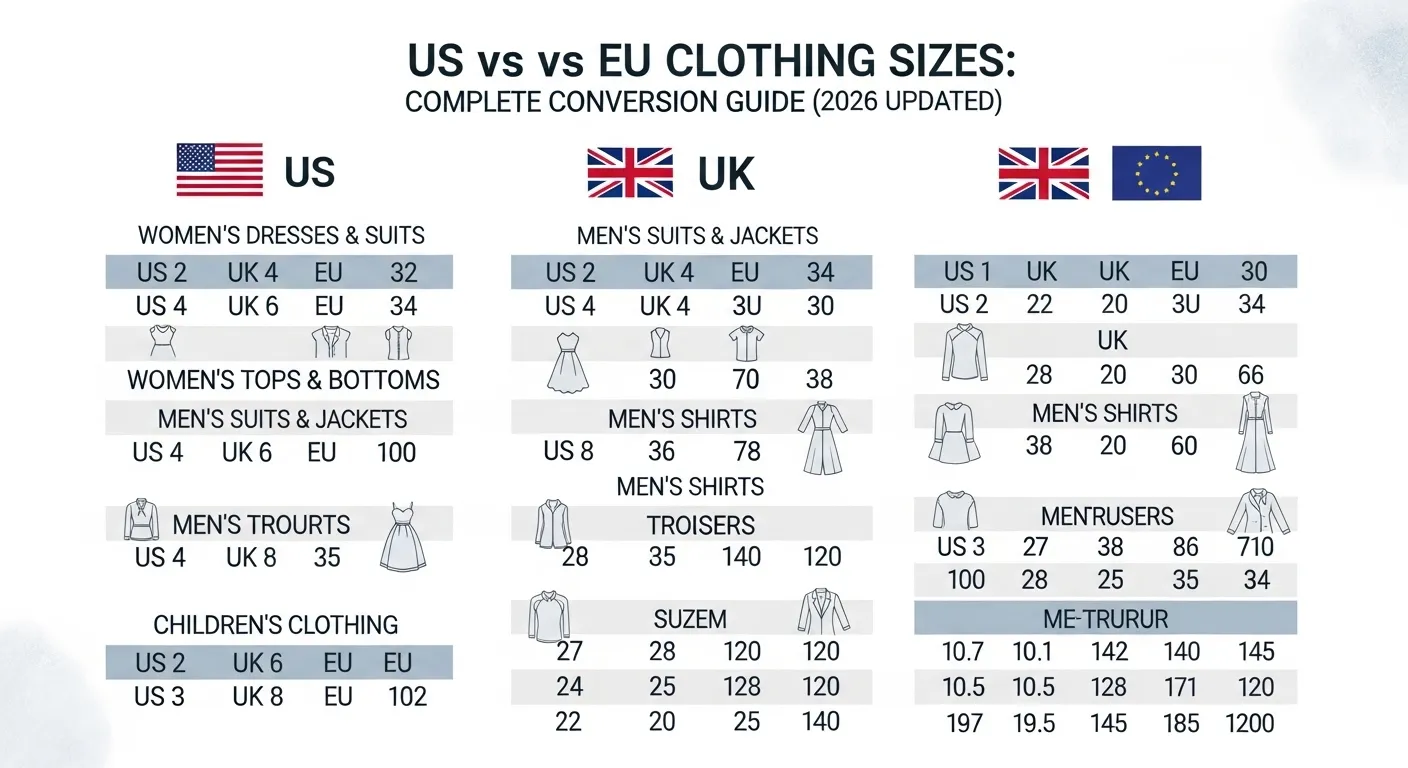
US, UK, and EU clothing sizes differ because each region uses its own measurement standards. The US and UK sizes are more numerical and closely related, while EU sizes are based on body measurements in centimeters. A US size 8 for women typically equals a UK size 12 and an EU size 40, but variations occur depending on brand and fit type.
Introduction: Why Size Conversion Matters in 2026
In today’s global fashion marketplace, shoppers regularly buy clothing from international brands across the US, UK, and Europe. However, one of the biggest challenges remains inconsistent sizing systems.
A “Medium” in one country may feel like a “Small” in another. Even worse, two brands in the same country may size their clothing differently.
This is why understanding US vs UK vs EU clothing size conversions is essential for online shopping, reducing return rates, and ensuring a better fit experience.
This guide breaks down everything you need to know in a simple, practical, and SEO-friendly format.
Understanding Clothing Size Systems
US Clothing Sizes
US sizing is commonly used in North America. It is based on numbered systems for women and men.
-
Women: 0, 2, 4, 6, 8, 10, 12, etc.
-
Men: 34, 36, 38, 40, etc. (based on chest/inseam measurements)
US sizes are not directly measurement-based, which often leads to inconsistencies across brands.
🇬🇧 UK Clothing Sizes
UK sizes are very similar to US sizes but usually run 4 sizes higher for women.
-
Example: US 4 = UK 8
-
Men’s sizing is closer but still varies slightly
UK fashion brands often follow traditional tailoring systems, especially in formal wear.
EU Clothing Sizes
EU sizing is the most standardized because it is based on body measurements in centimeters.
-
Example: EU 40 roughly corresponds to a 80–84 cm bust
-
Sizes increase in a consistent numerical pattern
EU sizes are widely used across Europe including France, Germany, Italy, and Spain (though slight national variations exist).
Complete US vs UK vs EU Size Conversion Chart
Women’s Clothing Conversion Chart
|
US Size |
UK Size |
EU Size |
|
0 |
4 |
32 |
|
2 |
6 |
34 |
|
4 |
8 |
36 |
|
6 |
10 |
38 |
|
8 |
12 |
40 |
|
10 |
14 |
42 |
|
12 |
16 |
44 |
|
14 |
18 |
46 |
|
16 |
20 |
48 |
Men’s Clothing Conversion Chart
|
US Chest Size |
UK Size |
EU Size |
|
34 |
34 |
44 |
|
36 |
36 |
46 |
|
38 |
38 |
48 |
|
40 |
40 |
50 |
|
42 |
42 |
52 |
|
44 |
44 |
54 |
|
46 |
46 |
56 |
Why Clothing Sizes Are Not Always Accurate
Even with conversion charts, sizing can still vary due to several factors:
1. Brand Differences
Each fashion brand uses its own “fit model,” meaning:
-
Slim fit brands run smaller
-
Relaxed fit brands run larger
2. Fabric Stretch & Material
-
Cotton shrinks slightly
-
Elastane adds stretch flexibility
-
Denim fits differently than polyester blends
3. Regional Body Shape Standards
Different regions design clothing based on average body proportions:
-
US sizing often assumes broader builds
-
UK sizing is slightly more tailored
-
EU sizing is more proportional to height and measurements
How to Measure Yourself Correctly (Essential Step)
To find your correct size, always measure your body before converting:
Key Measurements:
-
Bust / Chest
-
Waist
-
Hips
-
Inseam (for pants)
Pro Tip:
Use a soft measuring tape and measure over light clothing for accuracy.
Common Size Conversion Mistakes to Avoid
Many online shoppers make these errors:
❌ Assuming “Medium” is universal
❌ Ignoring brand-specific size charts
❌ Not checking EU measurement equivalents
❌ Buying based on old size history
Always verify with the brand’s official chart before purchasing.
International Shopping & Size Confusion
Global eCommerce platforms make shopping easier but also more confusing. A single product may show different sizing systems depending on region.
For example:
-
US site: Size 8
-
UK site: Size 12
-
EU site: Size 40
Without conversion knowledge, this leads to incorrect orders and returns.
Helpful External Tools and Resources
Some platforms even integrate size calculators to improve fit accuracy and reduce returns. Many fashion marketplaces now use AI-based size recommendation systems.
In digital ecosystems, even unrelated industries such as online platforms like primogaming88 and primo gaming 88 highlight how personalization and user-specific systems are becoming increasingly important across industries—including fashion sizing technology.
Women’s vs Men’s Sizing Differences
Women’s Sizing:
-
More variation across brands
-
Focus on bust/waist/hip ratio
-
Higher inconsistency globally
Men’s Sizing:
-
More standardized in chest measurements
-
Easier cross-region conversion
-
Less variation in formal wear
Expert Tip: Always Use Measurement First, Size Second
The most reliable method in 2026 is not relying on “S, M, L” or even numeric size labels—but using body measurements.
Formula for best fit:
Your body measurement → brand size chart → regional conversion → final size selection
Frequently Asked Questions (FAQ)
1. Is US size the same as UK size?
No. UK sizes are generally 4 sizes higher than US women’s sizes.
2. What is EU size 40 in the US?
EU 40 is typically a US women’s size 8.
3. Why are clothing sizes different in every country?
Because each region developed independent sizing systems based on local body measurement standards.
4. Can I always trust size charts?
They are helpful but not perfect. Always check brand-specific sizing.
5. What is the safest way to buy clothes online internationally?
Measure your body and compare it to the product’s official size chart.
Final Thoughts
Understanding US vs UK vs EU clothing sizes is essential for modern online shopping. As global fashion continues to expand in 2026, size conversion knowledge helps shoppers reduce returns, save money, and improve overall fit accuracy.
While size systems will likely remain inconsistent, using measurement-based selection and reliable conversion charts ensures you always choose the right fit—no matter where you shop in the world.